Sunday, October 26, 2008

Maria Gaetana Agnesi

Maria Agnesi

May 16, 1718 - January 9, 1799


Written by Elif Unlu, Class of 1995 (Agnes Scott College)

Even though her contribution to mathematics are very important, Maria Gaetana Agnesi was not a typical famous mathematician. She led a quite simple life and she gave up mathematics very early. At first glance her life may seem to be boring, however, considering the circumstances in which she was raised, her accomplishments to mathematics are glorious. Enjoy!

During the Middle Ages, under the influence of Christendom, many European countries were opposed to any form of higher education for females. Women were mostly deprived from the fundamental elements of education, such as reading and writing, claiming that these were a source of temptation and sin. For the most part, learning was confined to monasteries and nunneries which constituted the only opportunity for education open to girls during the Middle Ages. After the fall of Constantinople (today Istanbul), many scholars migrated to Rome, bringing Europe knowledge and critical thinking, which in turn gave rise to the Renaissance. However, except in Italy, the status of women throughout Europe changed very slowly.

In Italy, however, where the Renaissance had its origin, women made their mark on the academic world. Intellectual women were admired by men, they were never ridiculed for being intellectual and educated. This attitude enabled Italian women to participate in arts, medicine, literature, and mathematics. Among many others, Maria Gaetana Agnesi was by far the most important and extraordinary figure in mathematics during the 18th century.

"Maria Gaetana Agnesi was born in Milan on May 16, 1718, to a wealthy and literate family" [Osen, 39]. She was the oldest of 21 children. Her father was a professor of mathematics and provided her a profound education. "She was recognized as a child prodigy very early; spoke French by the age of five; and had mastered Latin, Greek, Hebrew, and several modern languages by the age of nine. At her teens, Maria mastered mathematics" [Osen, 40]. The Agnesi home was a gathering place of the most distinguished intellectuals of the day. Maria participated in most of the seminars, engaging with the guests in abstract philosophical and mathematical discussions. Maria was very shy in nature and did not like these meetings. She continued participating in the home gatherings to please her father until the death of her mother. Her mothers death provided her the excuse to retire from public life. She took over management of the household. Her father did not oppose this, because it was difficult and expensive to find a housekeeper to take care of 21 children and a lonely man. It is possible that this heavy duty job was one of the reasons why she never married.

However, she did not give up mathematics yet. In 1738 she published a collection of complex essays on natural science and philosophy called Propositiones Philosophicae, based on the discussions of the intellectuals who gathered at her father's home. In many of these essays, she expressed her conviction that women should be educated.

By the age of twenty, she began working on her most important work, Analytical Institutions, dealing with differential and integral calculus. "It is said that she started writing Analytical Institutions as a textbook for her brothers, which then grew into a more serious effort" [Osen, 41]. When her work was published in 1748, it caused a sensation in the academic world. It was one of the first and most complete works on finite and infinitesimal analysis. Maria's great contribution to mathematics with this book was that it brought the works of various mathematicians together in a very systematic way with her own interpretations. The book became a model of clarity, it was widely translated and used as a textbook.

Analytical Institutions gave a clear summary of the state of knowledge in mathematical analysis. The first section of Analytical Institutions deals with the analysis of finite quantities. It also deals with elementary problems of maxima, minima, tangents, and inflection points. The second section discusses the analysis of infinitely small quantities. The third section is about integral calculus and gives a general discussion of the state of the knowledge. The last section deals with the inverse method of tangents and differential equations.

Agnesi's original drawing Maria Gaetana Agnesi is best known from the curve called the "Witch of Agnesi" (see illustration from her text Analytical Institutions). Agnesi wrote the equation of this curve in the form y = a*sqrt(a*x-x*x)/x because she considered the x-axis to be the vertical axis and the y-axis to be the horizontal axis [Kennedy]. Reference frames today use x horizontal and y vertical, so the modern form of the curve is given by the Cartesian equation yx2=a2(a-y) or y = a3/(x2 + a2). It is a versed sine curve, originally studied by Fermat. "It was called a versiera, a word derived from the Latin vertere, meaning 'to turn', but it was also an abbreviation for the Italian word avversiera, meaning 'the wife of the devil'" [Osen, 45]. However, when Maria's text was translated into English the word versiera was confused with "witch", and the curve came to be known as the witch of Agnesi.

After the success of her book, Maria was elected to the Bologna Academy of Sciences. The university sent her a diploma and her name was added to the faculty. However, there is a debate over whether or not Maria accepted this appointment. The consensus is that she accepted the position and served at the university until the death of her father. It seems that her father was the inspiration for her interest in mathematics. When he died, Maria gave up any further work in mathematics. "When, in 1762, the University of Turin asked her for her opinion of the young Lagrange's recent articles on the calculus of variations, her response was that she was no longer concerned with such interests" [Osen, 47].

Maria was a very religious woman. She devoted the rest of her life to the poor and homeless sick people, especially women. When the Pio Instituto Trivulzo, a home for the ill and infirm, was opened, Maria was given an appointment as the director of the institute. She took care of ill and dying women until her own death.

It seems to me that even though she was a genius, mathematics was only a temporary hobby of hers. It may be that she was only dealing with mathematics to please her father who apparently was expecting his prodigy child to be involved in mathematics. Of course, this is only a personal observation. However, her behavior implies that she was not dedicated to mathematics which I think explains why she gave up mathematics altogether as soon as her father died. She was a very shy and decent person. She was not ambitious to become a well-known mathematician. Her most famous work, Analytical Institutions, was intended to be a textbook for her brothers. Her intelligence and talent made it possible to integrate all the state of the art knowledge about calculus in a very clear way. Religious life and helping the needy seem to have interested her more than mathematics.

April 1995


Notes by Larry Riddle

Maria Gaetana Agnesi's younger sister, Maria Teresa Agnesi, was a composer, harpsichordist, singer and librettist. She was born on October 17, 1720. While still a teenager, she would perform in her home while her older sister lectured and debated in Latin. Her first theatrical work, Il ristoro d'Arcadia, was successfully presented in Milan in 1747. She wrote seven operas of which three were based on her own librettos. The Empress Maria Theresia was known to sing from a collection of arias that Maria Teresa Agnesi had composed for her. In 1752 she married Pier Antonio Pinottini but had no children. She died on January 19, 1795. Her portrait hangs today in the theatre museum of La Scala.

Here are three of the keyboard pieces composed by Maria Teresa Agnesi. To listen to these pieces you will need to configure your browser to play midi files.

Sonata per il Clavicembalo (Allegro and Menuet)
Sonata in G Major
Allegro ou Presto in A Major

The Canadian composer Elma Miller has written a work called "The Witch of Agnesi" for B flat clarinet, bass clarinet, horn, 2 percussion, viola and double bass. The work was commissioned by the Alliance for Canadian New Music Projects and was first performed in late October 1989 in Toronto. Despite its premier performance so near Halloween, the inspiration for the piece was the curve of Maria Agnesi!

International Year of Astronomy (IYA)
...and Kepler


Kepler Portrait

(Picture courtesy of Sternwarte Kremsmünster, Upper-Austria)
A Short Biography

Johannes Kepler was born at 2:30 PM on December 27, 1571, in Weil der Stadt, Württemburg, in the Holy Roman Empire of German Nationality. He was a sickly child and his parents were poor. But his evident intelligence earned him a scholarship to the University of Tübingen to study for the Lutheran ministry. There he was introduced to the ideas of Copernicus and delighted in them. In 1596, while a mathematics teacher in Graz, he wrote the first outspoken defense of the Copernican system, the Mysterium Cosmographicum.

Kepler's family was Lutheran and he adhered to the Augsburg Confession a defining document for Lutheranism. However, he did not adhere to the Lutheran position on the real presence and refused to sign the Formula of Concord. Because of his refusal he was excluded from the sacrament in the Lutheran church. This and his refusal to convert to Catholicism left him alienated by both the Lutherans and the Catholics. Thus he had no refuge during the Thirty-Years War.

Map of Holy Roman Empire
The Holy Roman Empire of German Nationality at the Time of Kepler

Kepler was forced to leave his teaching post at Graz due to the counter Reformation because he was Lutheran and moved to Prague to work with the renowned Danish astronomer, Tycho Brahe. He inherited Tycho's post as Imperial Mathematician when Tycho died in 1601. Using the precise data that Tycho had collected, Kepler discovered that the orbit of Mars was an ellipse. In 1609 he published Astronomia Nova, delineating his discoveries, which are now called Kepler's first two laws of planetary motion. And what is just as important about this work, "it is the first published account wherein a scientist documents how he has coped with the multitude of imperfect data to forge a theory of surpassing accuracy" (O. Gingerich in forward to Johannes Kepler New Astronomy translated by W. Donahue, Cambridge Univ Press, 1992), a fundamental law of nature. Today we call this the scientific method.

In 1612 Lutherans were forced out of Prague, so Kepler moved on to Linz. His wife and two sons had recently died. He remarried happily, but had many personal and financial troubles. Two infant daughters died and Kepler had to return to Württemburg where he successfully defended his mother against charges of witchcraft. In 1619 he published Harmonices Mundi, in which he describes his "third law."

In spite of more forced relocations, Kepler published the seven-volume Epitome Astronomiae in 1621. This was his most influential work and discussed all of heliocentric astronomy in a systematic way. He then went on to complete the Rudolphine Tables that Tycho had started long ago. These included calculations using logarithms, which he developed, and provided perpetual tables for calculating planetary positions for any past or future date. Kepler used the tables to predict a pair of transits by Mercury and Venus of the Sun, although he did not live to witness the events.

Johannes Kepler died in Regensburg in 1630, while on a journey from his home in Sagan to collect a debt. His grave was demolished within two years because of the Thirty Years War. Frail of body, but robust in mind and spirit, Kepler was scrupulously honest to the data.

Antony van Leeuwenhoek (1632-1723)


. . . my work, which I've done for a long time, was not pursued in order to gain the praise I now enjoy, but chiefly from a craving after knowledge, which I notice resides in me more than in most other men. And therewithal, whenever I found out anything remarkable, I have thought it my duty to put down my discovery on paper, so that all ingenious people might be informed thereof.

Antony van Leeuwenhoek. Letter of June 12, 1716


Antony van Leeuwenhoek was an unlikely scientist. A tradesman of Delft, Holland, he came from a family of tradesmen, had no fortune, received no higher education or university degrees, and knew no languages other than his native Dutch. This would have been enough to exclude him from the scientific community of his time completely. Yet with skill, diligence, an endless curiosity, and an open mind free of the scientific dogma of his day, Leeuwenhoek succeeded in making some of the most important discoveries in the history of biology. It was he who discovered bacteria, free-living and parasitic microscopic protists, sperm cells, blood cells, microscopic nematodes and rotifers, and much more. His researches, which were widely circulated, opened up an entire world of microscopic life to the awareness of scientists.

Leeuwenhoek was born in Delft on October 24, 1632. (His last name, incidentally, often is quite troublesome to non-Dutch speakers: "layu-wen-hook" is a passable English approximation.) His father was a basket-maker, while his mother's family were brewers. Antony was educated as a child in a school in the town of Warmond, then lived with his uncle at Benthuizen; in 1648 he was apprenticed in a linen-draper's shop. Around 1654 he returned to Delft, where he spent the rest of his life. He set himself up in business as a draper (a fabric merchant); he is also known to have worked as a surveyor, a wine assayer, and as a minor city official. In 1676 he served as the trustee of the estate of the deceased and bankrupt Jan Vermeer, the famous painter, who had had been born in the same year as Leeuwenhoek and is thought to have been a friend of his. And at some time before 1668, Antony van Leeuwenhoek learned to grind lenses, made simple microscopes, and began observing with them. He seems to have been inspired to take up microscopy by having seen a copy of Robert Hooke's illustrated book Micrographia, which depicted Hooke's own observations with the microscope and was very popular.

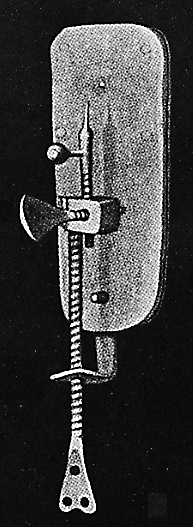
microscope Leeuwenhoek is known to have made over 500 "microscopes," of which fewer than ten have survived to the present day. In basic design, probably all of Leeuwenhoek's instruments -- certainly all the ones that are known -- were simply powerful magnifying glasses, not compound microscopes of the type used today. A drawing of one of Leeuwenhoek's "microscopes" is shown at the left. Compared to modern microscopes, it is an extremely simple device, using only one lens, mounted in a tiny hole in the brass plate that makes up the body of the instrument. The specimen was mounted on the sharp point that sticks up in front of the lens, and its position and focus could be adjusted by turning the two screws. The entire instrument was only 3-4 inches long, and had to be held up close to the eye; it required good lighting and great patience to use.

Compound microscopes (that is, microscopes using more than one lens) had been invented around 1595, nearly forty years before Leeuwenhoek was born. Several of Leeuwenhoek's predecessors and contemporaries, notably Robert Hooke in England and Jan Swammerdam in the Netherlands, had built compound microscopes and were making important discoveries with them. These were much more similar to the microscopes in use today. Thus, although Leeuwenhoek is sometimes called "the inventor of the microscope," he was no such thing.

However, because of various technical difficulties in building them, early compound microscopes were not practical for magnifying objects more than about twenty or thirty times natural size. Leeuwenhoek's skill at grinding lenses, together with his naturally acute eyesight and great care in adjusting the lighting where he worked, enabled him to build microscopes that magnified over 200 times, with clearer and brighter images than any of his colleagues could achieve. What further distinguished him was his curiosity to observe almost anything that could be placed under his lenses, and his care in describing what he saw. Although he himself could not draw well, he hired an illustrator to prepare drawings of the things he saw, to accompany his written descriptions. Most of his descriptions of microorganisms are instantly recognizable.

In 1673, Leeuwenhoek began writing letters to the newly-formed Royal Society of London, describing what he had seen with his microscopes -- his first letter contained some observations on the stings of bees. For the next fifty years he corresponded with the Royal Society; his letters, written in Dutch, were translated into English or Latin and printed in the Philosophical Transactions of the Royal Society, and often reprinted separately. To give some of the flavor of his discoveries, we present extracts from his observations, together with modern pictures of the organisms that Leeuwenhoek saw.

In a letter of September 7, 1674, Leeuwenhoek described observations on lake water, including an excellent description of the green charophyte alga Spirogyra: "Passing just lately over this lake, . . . and examining this water next day, I found floating therein divers earthy particles, and some green streaks, spirally wound serpent-wise, and orderly arranged, after the manner of the copper or tin worms, which distillers use to cool their liquors as they distil over. The whole circumference of each of these streaks was about the thickness of a hair of one's head. . . all consisted of very small green globules joined together: and there were very many small green globules as well."

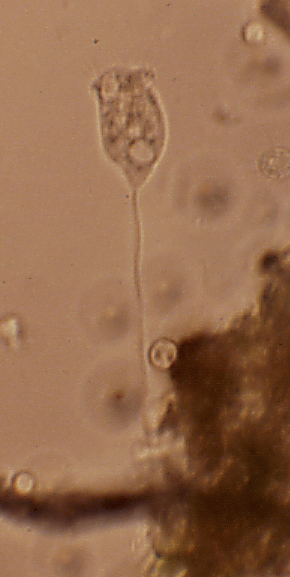
A letter dated December 25, 1702, gives descriptions of many protists, including this ciliate, Vorticella: "In structure these little animals were fashioned like a bell, and at the round opening they made such a stir, that the particles in the water thereabout were set in motion thereby. . . And though I must have seen quite 20 of these little animals on their long tails alongside one another very gently moving, with outstretched bodies and straightened-out tails; yet in an instant, as it were, they pulled their bodies and their tails together, and no sooner had they contracted their bodies and tails, than they began to stick their tails out again very leisurely, and stayed thus some time continuing their gentle motion: which sight I found mightily diverting."

On September 17, 1683, Leeuwenhoek wrote to the Royal Society about his observations on the plaque between his own teeth, "a little white matter, which is as thick as if 'twere batter." He repeated these observations on two ladies (probably his own wife and daughter), and on two old men who had never cleaned their teeth in their lives. Looking at these samples with his microscope, Leeuwenhoek reported how in his own mouth: "I then most always saw, with great wonder, that in the said matter there were many very little living animalcules, very prettily a-moving. The biggest sort. . . had a very strong and swift motion, and shot through the water (or spittle) like a pike does through the water. The second sort. . . oft-times spun round like a top. . . and these were far more in number." In the mouth of one of the old men, Leeuwenhoek found "an unbelievably great company of living animalcules, a-swimming more nimbly than any I had ever seen up to this time. The biggest sort. . . bent their body into curves in going forwards. . . Moreover, the other animalcules were in such enormous numbers, that all the water. . . seemed to be alive." These were among the first observations on living bacteria ever recorded.

Leeuwenhoek looked at animal and plant tissues, at mineral crystals and at fossils. He was the first to see microscopic foraminifera, which he described as "little cockles. . . no bigger than a coarse sand-grain." He discovered blood cells, and was the first to see living sperm cells of animals. He discovered microscopic animals such as nematodes and rotifers. The list of his discoveries goes on and on. Leeuwenhoek soon became famous as his letters were published and translated. In 1680 he was elected a full member of the Royal Society, joining Robert Hooke, Henry Oldenburg, Robert Boyle, Christopher Wren, and other scientific luminaries of his day -- although he never attended a meeting. In 1698 he demonstrated circulation in the capillaries of an eel to Tsar Peter the Great of Russia, and he continued to receive visitors curious to see the strange things he was describing. He continued his observations until the last days of his life. After his death on August 30, 1723, the pastor of the New Church at Delft wrote to the Royal Society:

. . . Antony van Leeuwenhoek considered that what is true in natural philosophy can be most fruitfully investigated by the experimental method, supported by the evidence of the senses; for which reason, by diligence and tireless labour he made with his own hand certain most excellent lenses, with the aid of which he discovered many secrets of Nature, now famous throughout the whole philosophical World.

British scientist Brian J. Ford has rediscovered some of Leeuwenhoek's original specimens in the archives of the Royal Society of London. His study of these historic specimens and other material, using Leeuwenhoek's own microscopes and other single-lens microscopes, has shown how remarkably good a scientist and craftsman Leeuwenhoek really was. Here's the full story of Dr. Ford's research.

Berkeley, California resident Al Shinn manufactures replicas of Leeuwenhoek microscopes. He has also made plans and instructions available, for those who would like to make their own Leeuwenhoek-type microscopes.


Lavoisier, Antoine (1743-1794)

French chemist who, through a conscious revolution, became the father of modern chemistry. As a student, he stated "I am young and avid for glory." He was educated in a radical tradition, a friend of Condillac and read Maquois's dictionary. He won a prize on lighting the streets of Paris, and designed a new method for preparing saltpeter. He also married a young, beautiful 13-year-old girl named Marie-Anne, who translated from English for him and illustrated his books. Lavoisier demonstrated with careful measurements that transmutation of water to earth was not possible, but that the sediment observed from boiling water came from the container. He burnt phosphorus and sulfur in air, and proved that the products weighed more than he original. Nevertheless, the weight gained was lost from the air. Thus he established the Law of Conservation of Mass.

Repeating the experiments of Priestley, he demonstrated that air is composed of two parts, one of which combines with metals to form calxes. However, he tried to take credit for Priestley's discovery. This tendency to use the results of others without acknowledgment then draw conclusions was characteristic of Lavoisier. In Considérations Générales sur la Nature des Acides (1778), he demonstrated that the "air" responsible for combustion was also the source of acidity. The next year, he named this portion oxygen (Greek for acid-former), and the other azote (Greek for no life). He also discovered that the inflammable air of Cavendish which he termed hydrogen (Greek for water-former), combined with oxygen to produce a dew, as Priestley had reported, which appeared to be water.

In Reflexions sur le Phlogistique (1783), Lavoisier showed the phlogiston theory to be inconsistent. In Methods of Chemical Nomenclature (1787), he invented the system of chemical nomenclature still largely in use today, including names such as sulfuric acid, sulfates, and sulfites. His Traité Élémentaire de Chimie (Elementary Treatise of Chemistry, 1789) was the first modern chemical textbook, and presented a unified view of new theories of chemistry, contained a clear statement of the Law of Conservation of Mass, and denied the existence of phlogiston. In addition, it contained a list of elements, or substances that could not be broken down further, which included oxygen, nitrogen, hydrogen, phosphorus, mercury, zinc, and sulfur. His list, however, also included light, Eric Weisstein's World of Physics and caloric, Eric Weisstein's World of Physics which he believed to be material substances. In the work, Lavoisier underscored the observational basis of his chemistry, stating "I have tried...to arrive at the truth by linking up facts; to suppress as much as possible the use of reasoning, which is often an unreliable instrument which deceives us, in order to follow as much as possible the torch of observation and of experiment." Nevertheless, he believed that the real existence of atoms was philosophically impossible. Lavoisier demonstrated that organisms disassemble and reconstitute atmospheric air in the same manner as a burning body.

With Laplace, he used a calorimeter to estimate the heat evolved per unit of carbon dioxide produced. They found the same ratio for a flame and animals, indicating that animals produced energy by a type of combustion. Lavoisier believed in the radical theory, believing that radicals, which function as a single group in a chemical reaction, would combine with oxygen in reactions. He believed all acids contained oxygen. He also discovered that diamond is a crystalline form of carbon. Lavoisier made many fundamental contributions to the science of chemistry. The revolution in chemistry which he brought about was a result of a conscious effort to fit all experiments into the framework of a single theory. He established the consistent use of chemical balance, used oxygen to overthrow the phlogiston theory, and developed a new system of chemical nomenclature. He was beheaded during the French revolution.

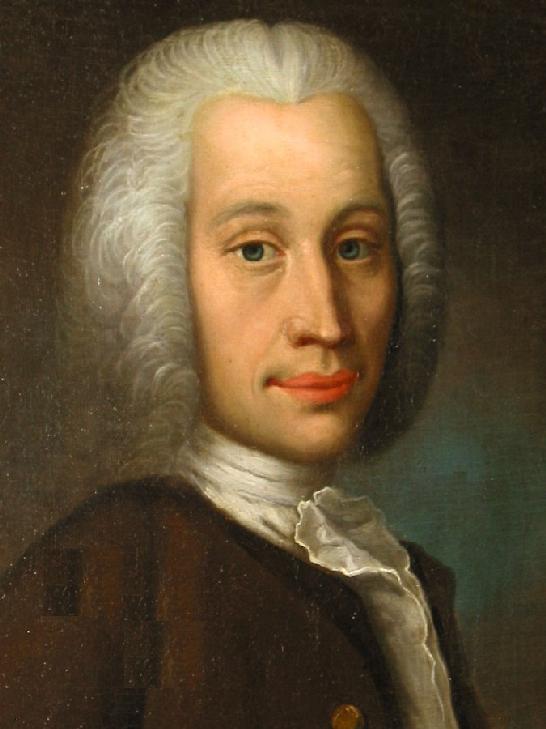
Anders Celsius
Anders Celsius
1701-1744

Anders Celsius, born in Uppsala, was one of a large number of scientists (all related) originating from Ovanåker in the province of Hälsingland. The family name is a latinised version of the name of the vicarage (Högen). His grandfathers were both professors in Uppsala: Magnus Celsius the mathematician and Anders Spole the astronomer. His father, Nils Celsius, was also professor in astronomy. Celsius, who was said to have been very talented in mathematics from an early age, was appointed professor of astronomy in 1730.

He began his "grand tour", lasting for four years, in 1732, and he visited during these years almost all the notable european observatories of the day, where he worked with many of the leading 18th century astronomers.

Soon after his return to Uppsala he participated in the French astronomer Maupertuis' famous expedition 1736 to Torneå, in the most northern part of Sweden. ("The Lapland expedition.") The aim of the expedition was to measure the length of a degree along a meridian, close to the pole, and compare the result with a similar expedition to Peru (today Ecuador) near the equator. The expeditons confirmed Newton's belief that the shape of the earth is an ellipsoid flattened at the poles.

Celsius' participation in this expedition made him famous and was important in his efforts to interest the Swedish authorities in donating the resources necessary to build a modern observatory in Uppsala. He was successful, and the Celsius observatory was ready in 1741, equipped with instruments purchased during his long voyage abroad, comprising the most modern instrumental technology at that time.

In those days geographical measurements, metereological observations and other things, not considered as astronomy today, were included in the work of an astronomy professor. He carried out many geographical measurements for the Swedish General map, and was also one of the first to note that the land of the nordic countries is slowly rising above sea level, a process which has been going on since the melting of the ice from the latest ice age. He believed though, that it was the water that was evaporating.

For his metereological observations he constructed his world famous Celsius thermometer, with 0 for the boiling point of water and 100 for the freezing point. After his death in 1744 the scale was reversed to its present form.

Together with his assistant Olof Hjorter he also was the first to realize that the aurora phenomenon has magnetic causes through observing the inclination of a compass-needle and finding that the larger deviations correlated with stronger aurora activity.

In astronomy he made observations of eclipses and various astronomical objects. He published catalogues of carefully determined magnitudes for a total of 300 stars using his own photometric system (mean error=0.4 mag). The idea of his system consists of using identical transparent glass plates and viewing the ray of light from a star through them. He could then compare the magnitudes of the stars by the number of glass plates needed to extinguishe the light. (The star Sirius, the brightest star in the sky, needed 25 of his plates to be extinguished.)

Celsius published most of his work in the publications of the Royal Society of Sciences in Uppsala, which is the oldest Swedish scientific society founded in 1710, where Celsius was the secretary 1725-1744, and in the publications of the Royal Swedish Academy of Sciences, founded in 1739. He also presided at about twenty dissertations in astronomy where, as was the general rule in those days, he was the main author. His popular book Arithmetics for the Swedish Youth was typical of the spirit of his period, the Enlightenment.
Celsius was a very active supporter for introducing the Gregorian calender in Sweden but he wasn't successful until 1753, almost ten years after his death, when the Julian calender was abandoned by dropping 11 days.

Anders Celsius died of tuberculosis in april 1744, only 42 years old. His grave is next to his grandfather's, Magnus Celsius, in the church at Gamla Uppsala, about 5 km north of central Uppsala.

Saturday, October 25, 2008

A rainbow is an optical and meteorological phenomenon that causes a nearly continuous spectrum of light to appear in the sky when the Sun shines onto droplets of moisture in the Earth's atmosphere. It takes the form of a multicolored arc, with red on the outside and violet on the inside. Even though a rainbow spans a continuous spectrum of colors, traditionally the full sequence of colors is most commonly cited as red, orange, yellow, green, blue, and violet. It is commonly thought that indigo was included due to the different religious connotations of the numbers six and seven at the time of Isaac Newton's work on light, despite its lack of scientific significance and the poor ability of humans to distinguish colors in the blue portion of the visual spectrum.

The rainbow effect can be observed whenever there are water drops in the air and sunlight shining from behind the observer at a low altitude or angle. The most spectacular rainbow displays when half of the sky is still dark with draining clouds and the observer is at a spot with clear sky overhead. The rainbow effect is also commonly seen near waterfalls or fountains.

Rainbow fringes can sometimes be seen at the edges of backlit clouds and as vertical bands in distant rain or virga. The effect can also be artificially created by dispersing water droplets into the air during a sunny day.In a very few cases, a moonbow, or night-time rainbow, can be seen on strongly moonlit nights. As human visual perception for colour in low light is poor, moonbows are most often perceived to be white.

The rainbow's appearance is caused by dispersion of sunlight as it is refracted by (approximately spherical) raindrops. The light is first refracted as it enters the surface of the raindrop, reflected off the back of the drop, and again refracted as it leaves the drop. The overall effect is that the incoming light is reflected back over a wide range of angles, with the most intense light at an angle of about 40°-42°. This angle is independent of the size of the drop, but does depend a lot on its shape and refractive index. Due to the surface tension waterdrops are always round and the refractive index of pure water is always 1.33. Seawater, on the other hand has a higher refractive index, which results in a smaller angle. This is easily measurable when a 'rain'bow is created from splashing up seawaves.

Since the water is dispersive, the amount that the sunlight is bent depends upon the wavelength, and hence colour, of the light's constituent parts. Blue light is refracted at a greater angle than red light, but because the area of the back of the droplet has a focal point inside the droplet, the spectrum crosses itself, and therefore the red light appears higher in the sky, and forms the outer colour of the rainbow.

Contrary to popular belief, the light at the back of the raindrop does not undergo total internal reflection; however, light that emerges from the back of the raindrop does not create a rainbow between the observer and the Sun. The spectra emitted from the back of the raindrop do not have a maximum of intensity, as the other visible rainbows do, and thus the colours blend together and do not form a rainbow.

A rainbow does not actually exist at a location in the sky, but rather is an optical phenomenon whose apparent position depends on the observer's location. All raindrops refract and reflect the sunlight in the same way, but only the light from some raindrops reaches the observer's eye.

These raindrops are perceived to constitute the rainbow by that observer. The position of a rainbow in the sky is always in the opposite direction of the Sun with respect to the observer, and the interior is always slightly brighter than the exterior.

The bow is centred on the shadow of the observer's head, or more exactly at the antisolar point (which is below the horizon during the daytime), appearing at an angle of approximately 40°-42° to the line between the observer's head and its shadow. As a result, if the Sun is higher than 42°, then the rainbow is below the horizon and cannot be seen as there are usually not enough raindrops between the horizon (that is: eye height) and the ground, to contribute.

One exception is when the observer is at the top of a mountain or a similar vantage point, for example an aeroplane (see below). Another exception occurs when the rainbow is produced by a garden sprinkler. Although in this case to get sufficient drops they must be very small, resulting in a quite colourless bow. It is difficult to photograph the complete arc of a rainbow, which would require an angle of view of 84°.

For a 35 mm camera, a lens with a focal length of 19 mm or less would be required, whilst most photographers are only likely to have a 28 mm wide-angle lens.

From an airplane, one has the opportunity to see the whole circle of the rainbow, with the plane's shadow in the center. This phenomenon can be confused with the glory, but a glory is usually much smaller, covering only 5°­20°, as opposed to over 80° for a full circle rainbow. Speed and direction of light in materials?

  • In a vacuum all frequencies of light travel at the same speed but in a material, the speed is reduced.
  • The ratio of the speed of light in a vacuum, c, to the speed of light in a material, v, is the index of refraction,
  • n = c / v.n equals about 1.333 in water

The change in speed causes the direction of a light beam to change. There is a relationship between the angles at which light enters and leaves a boundary between materials with different indices of refraction called Snell's law. It is: n1 * sin (theta1) = n2 * sin (theta2)

Variations

Occasionally, a second, dimmer secondary rainbow is seen outside the primary bow. Secondary rainbows are caused by a double reflection of sunlight inside the raindrops, and appear at an angle of 50°­53°. As a result of the second reflection, the colours of a secondary rainbow are inverted compared to the primary bow, with blue on the outside and red on the inside. The dark area of unlit sky lying between the primary and secondary bows is called Alexander's band, after Alexander of Aphrodisias who first described it.


Double Rainbow Photos

A third, or triple, rainbow can be seen on rare occasions, and a few observers have reported seeing quadruple rainbows in which a dim outermost arc had a rippling and pulsating appearance. These rainbows would appear on the same side of the sky as the Sun, making them hard to spot.


Contrast-enhanced photograph of a supernumerary rainbow,
with additional green and purple arcs inside the primary bow.

Occasionally, another beautiful and striking rainbow phenomenon can be observed, consisting of several faint rainbows on the inner side of the primary rainbow, and very rarely also outside the secondary rainbow. They are slightly detached and have pastel colour bands that do not fit the usual pattern. They are known as supernumerary rainbows, and it is not possible to explain their existence using classical geometric optics.

The alternating faint rainbows are caused by interference between rays of light following slightly different paths with slightly varying lengths within the raindrops. Some rays are in phase, reinforcing each other through constructive interference, creating a bright band; others are out of phase by up to half a wavelength, cancelling each other out through destructive interference, and creating a gap. Given the different angles of refraction for rays of different colours, the patterns of interference are slightly different for rays of different colours, so each bright band is differentiated in colour, creating a miniature rainbow. Supernumary rainbows are clearest when raindrops are small and of similar size. The very existence of supernumary rainbows was historically a first indication of the wave nature of light, and the first explanation was provided by Thomas Young in 1804.


Primary and secondary rainbows are visible, as well as a
reflected primary and a faintly visible reflection primary.

Other rainbow variants are produced when sunlight reflects off a body of water. Where sunlight reflects off water before reaching the raindrops, it produces a reflection rainbow. These rainbows share the same endpoints as a normal rainbow but encompass a far greater arc when all of it is visible. Both primary and secondary reflection rainbows can be observed.

A reflected rainbow, by contrast, is produced when light that has first been reflected inside raindrops then reflects off a body of water before reaching the observer. A reflected rainbow is not a mirror image of the primary bow, but is displaced from it to a degree dependent on the Sun's altitude. Both types can be seen in the image to the right.

History of the Science of Rainbows

The Persian astronomer Qutb al-Din al-Shirazi (1236-1311), or perhaps his student Kamal al-din al-Farisi (1260-1320), is thought to have first given a fairly accurate explanation for the rainbow phenomenon.

The work of Robert Grosseteste on light was continued by Roger Bacon, who wrote in his Opus Majus of 1268 about experiments with light shining through crystals and water droplets showing the colors of the rainbow.

Theodoric of Freiberg is also known to have given an accurate theoretical explanation of both the primary and secondary rainbows in 1307. He explained the primary rainbow, noting that "when sunlight falls on individual drops of moisture, the rays undergo two refractions (upon ingress and egress) and one reflection (at the back of the drop) before transmission into the eye of the observer" (quoted from David C, Lindberg, Roger Bacon's Theory of the Rainbow: Progress or Regress?, Isis, Vol. 57, no. 2, p. 235). He explained the secondary rainbow through a similar analysis involving two refractions and two reflections.


René Descartes' sketch of how primary and secondary rainbows are formed

Descartes, in 1637, further advanced this explanation. Knowing that the size of raindrops didn't appear to affect the observed rainbow, he experimented with passing rays of light through a large glass sphere filled with water. By measuring the angles that the rays emerged, he concluded that the primary bow was caused by a single internal reflection inside the raindrop and that a secondary bow could be caused by two internal reflections. He was able to back this up with a derivation of the law of refraction (subsequently, but independently of, Snell) and correctly calculated the angles for both bows. His explanation of the colors, however, was based on a mechanical version of the traditional theory that colors were produced by a modification of white light.

Isaac Newton was the first to demonstrate that white light was composed of the light of all the colors of the rainbow, which a glass prism could separate into the full spectrum of colours, rejecting the theory that the colors were produced by a modification of white light. He also showed that red light gets refracted less than blue light, which led to the first scientific explanation of the major features of the rainbow. Newton's corpuscular theory of light was unable to explain supernumary rainbows, and a satisfactory explanation was not found until Thomas Young realised that light behaves as a wave under certain conditions, and can interfere with itself.

Young's work was refined in the 1820s by George Biddell Airy, who explained the dependence of the strength of the colours of the rainbow on the size of the water droplets. Modern physical descriptions of the rainbow are based on Mie scattering, work published by Gustav Mie in 1908. Advances in computational methods and optical theory continue to lead to a fuller understanding of rainbows. For example, Nussenzveig provides a modern overview.

Rainbows


Circumhorizon Arcs


Circumhorizon Arc
Wikipedia

A circumhorizonal arc or circumhorizon arc (CHA), also known as a "fire rainbow", is a halo or an optical phenomenon similar in appearance to a horizontal rainbow, but in contrast caused by the refraction of light through the ice crystals in cirrus clouds.

It occurs only when the sun is high in the sky, at least 58° above the horizon, and can only occur in the presences of cirrus clouds. It can thus not be observed at locations north of 55°N or south of 55°S, except occasionally at higher latitudes from mountains. To be visible the sun must be at an elevation of 57.8° (90 -32.2°) or more and if cloud conditions are right it is seen along the horizon on the same side of the sky as the sun. It reaches its maximum intensity at a sun elevation of 67.9°.

The phenomenon is quite rare because the ice crystals must be aligned horizontally to refract the high sun. The arc is formed as light rays enter the horizontally-oriented flat hexagonal crystals through a vertical side face and exit through the horizontal bottom face. It is the 90° inclination that produces the well-separated rainbow-like colours and, if the crystal alignment is just right, makes the entire cirrus cloud shine like a flaming rainbow.

A circumhorizontal arc can be confused with an infralateral arc when the sun is high in the sky; the former is however always oriented horizontally where the latter is oriented as a section of a rainbow, e.g. as an arc stretching upwards from the horizon.


Circumhorizon Arc - Summer Halo
Atmospheric Optics


Rare Rainbow Over Idaho - "Rainbow Fire" - Circumhorizon Arc

National Geographic June 19, 2006


Rainbows in the News ...


Scientists Stop Light in 'Trapped Rainbow' Live Science - November 15, 2007

Scientists have worked out how to bring beams of light to a screeching halt inside a material that would separate the light into its constituent colors, creating a rainbow - a trapped rainbow.

The Edge of the Rainbow Live Science - August 26, 2007

Ordinary light is made up of light of many different colors. You can see these colors if you bounce the light of a thin film on a highly reflective surface. Oil slicks show this effect where you see a whole spectrum of colors that result from the light reflecting of the surface of the oil and whatever is underneath. Here, a thin polymer film is receding across a highly reflective silicon substrate leaving behind small droplets in its wake. The different colors tell you the thickness of the film; and, as you can see, it changes as you go across the film. The droplets form because the polymer doesn't like the surface and tries to bead up, just like water on a nonstick pan.

Stem Cell Research

Stem cells in animals are primal undifferentiated cells that retain the ability to produce an identical copy of themselves when they divide (self-renew) and differentiate into other cell types. In higher plants this function is the defining property of the meristematic cells. Stem cells have the ability to act as a repair system for the body, because they can divide and differentiate, replenishing other cells as long as the host organism is alive.

Medical researchers believe stem cell research has the potential to change the face of human disease by being used to repair specific tissues or to grow organs. Yet there is general agreement that, "significant technical hurdles remain that will only be overcome through years of intensive research."

The study of stem cells is attributed as beginning in the 1960s after research by Canadian scientists Ernest A. McCulloch and James E. Till.

Stem cells are also categorized according to their source, as either adult, embryonic, cancer or cord blood stem cells.

  • Embryonic stem cells are cultured cells obtained from the undifferentiated inner mass cells of an early stage human embryo (sometimes called a blastocyst, which is an embryo that is between 50 to 150 cells). Embryonic stem cell research is "thought to have much greater developmental potential than adult stem cells," according to the National Institutes of Health.

    Research using embryonic stem cells remains at the zenith of stem cell science because, unlike somatic cells, embryonic stem cells are pluripotent. However, research using stem cells derived from the human embryo is still in the basic research phase, as these stem cells were first isolated in 1998 (at least for humans), whereas adult stem cells have been studied since the 1960s.

    Research with embryonic stem cells derived from humans is controversial because, in order to start a stem cell 'line' or lineage, the destruction of a human embryo is usually required. In an attempt to overcome these moral, political and ethical hurdles, medical researchers have been experimenting with alternative techniques of obtaining embryonic stem cells by extraction, which does not involve the cloning or destruction of a human embryo.

  • Cancer stem cells arising through malignant transformation of adult stem cells are proposed to be the source of some or all tumors and cause metastasis and relapse of the disease. The stem cell origin of leukemias is well established. The role of stem cells in other tumors is under intensive investigation.

  • Cord blood stem cells are derived from the blood of the placenta and umbilical cord after birth. Since 1988 these cord blood stem cells have been used to treat Gunther's disease, Hunter syndrome, Hurler syndrome, Acute lymphocytic leukemia and many more problems occurring mostly in children.

    Umbilical cord blood use has become so common that there are now umbilical cord blood banks that accept donations from parents. It is collected by removing the umbilical cord, cleansing it and withdrawing blood from the umbilical vein. This blood is then immediately analyzed for infectious agents and the tissue-type is determined. The cord blood is processed and depleted of red blood cells before being stored in liquid nitrogen for later use, at which point it is thawed, washed of the cryoprotectant, and injected through a vein of the patient. This kind of treatment, where the stem cells are collected from another donor, is called allogeneic treatment. When the cells are collected from the same patient on whom they will be used, it is called autologous and when collected from identical individuals (i.e. homozygous twin), it is referred to as syngeneic.

Medical researchers believe that stem cell research has the potential to change the face of human disease. A number of current treatments already exist, although the majority of them are not commonly used because they tend to be experimental and not very cost-effective. Medical researchers anticipate being able to use technologies derived from stem cell research to treat cancer, spinal cord injuries, and muscle damage, amongst a number of other diseases, impairments and conditions. However, there still exists a great deal of social and scientific uncertainty surrounding stem cell research, which could possibly be overcome by gaining the acceptance of the public and through years of intensive research.

Stem cells however are already used extensively in research, and some scientists do not see cell therapy as the first goal of the research, but see the stem cells as a tool worthy in itself. Stem Cell ട്രീത്മെന്റ്സ്

Stem cell controversy is the ethical debate centered on research involving the creation, usage and destruction of human embryonic stem cells. Some opponents of the research argue that this practice is a slippery slope to reproductive cloning and fundamentally devalues the worth of a human being. Contrarily, some medical researchers in the field argue that it is necessary to pursue embryonic stem cell research because the resultant technologies could have significant medical potential, and that excess embryos created for in vitro fertilisation could be donated with consent and used for the research. This in turn, conflicts with opponents in the pro-life movement, who advocate for the protection of human embryos. The ensuing debate has prompted authorities around the world to seek regulatory frameworks and highlighted the fact that embryonic stem cell research represents a social and ethical challenge.

Contents

Stem cells

Main article: Stem cell

Stem cells are cells that are able to differentiate into specialized cell types but also retain the ability to renew themselves through cell division. They were first identified in embryos. In an embryonic blastocyst, stem cells of the inner cell mass proceed to develop into all of the tissues and organs of the body. In adults, progenitor cells and possibly multipotent adult stem cells act as a repair system for the body, replenishing more specialized cells. The existence of truly pluripotent stem cells in adult human beings is still scientifically controversial.

Therapies

Main article: Stem cell treatments

Since stem cells have the potential to be differentiated into basically any type of cell, they offer promise in the development of medical treatments for a wide range of conditions. These include damage to the brain, spinal cord, skeletal muscles and the heart. Treatments that have been proposed follow either physical trauma (e.g. spinal cord injuries), degenerative conditions (e.g. Parkinson's disease), or even genetic diseases (in combination with gene therapy). Yet further treatments using stem cells could potentially be developed thanks to their ability to repair extensive tissue damage.[1]

Much success and potential has been demonstrated from research using adult stem cells. There are no approved treatments or human trials using embryonic stem cells. Nevertheless, some are of the opinion that the differentiation potential of embryonic stem cells is broader than most adult stem cells. In addition, embryonic stem cells are considered more useful for nervous system therapies, as researchers have struggled to identify and isolate neural progenitors from adult tissues. Embryonic stem cells, however, might be rejected by the immune system - a problem which wouldn't occur if the patient received his or her own stem cells.

The major controversy is that the "best" stem cells come from growing embryos. The problem with the statement above is that the majority of the adult stem cells come from bone marrow transplants; these stem cells can help cure diseases such as leukemia, but they are not near as effective to diseases such as diabetes.

Alternative sources

Some stem cell researchers are working to develop techniques of isolating stem cells that are as potent as embryonic stem cells, but do not require a human embryo.

Some believe that human somatic cells can be coaxed to "de-differentiate" and revert to an embryonic state. Researchers at Harvard University, led by Kevin Eggan, have attempted to transfer the nucleus of a somatic cell into an existing embryonic stem cell, thus creating a new stem cell line.[2] Another study published in August 2006 also indicates that differentiated cells can be reprogrammed to an embryonic-like state by introducing four specific factors.[3]

Researchers at Advanced Cell Technology, led by Robert Lanza, reported the successful derivation of a stem cell line using a process similar to preimplantation genetic diagnosis, in which a single blastomere is extracted from a blastocyst.[4] At the 2007 meeting of the International Society for Stem Cell Research (ISSCR) [5], Lanza announced that his team had succeeded in producing three new stem cell lines without destroying the parent embryos. "These are the first human embryonic cell lines in existence that didn't result from the destruction of an embryo." Lanza is currently in discussions with the National Institutes of Health (NIH) to determine whether the new technique sidesteps U.S. restrictions on federal funding for ES cell research.[6]

According to a January 9, 2007 Daily Telegraph (London) article reporting on a statement by Dr. Anthony Atala of Wake Forest University, there is another "ethical" source of stem cells. The fluid surrounding the fetus has been found to contain stem cells, that, when utilized correctly, "can be differentiated towards cell types such as fat, bone, muscle, blood vessel, nerve and liver cells", according to the article. The extraction of this fluid does not harm the fetus in any way as well. "Our hope is that these cells will provide a valuable resource for tissue repair and for engineered organs as well," said Dr Atala.[7]

Patents

The patents covering a lot of work on human embryonic stem cells are owned by the Wisconsin Alumni Research Foundation (WARF). WARF does not charge academics to study human stem cells but does charge commercial users. WARF sold Geron Corp. exclusive rights to work on human stem cells but later sued Geron Corp. to recover some of the previously sold rights. The two sides agreed that Geron Corp. would keep the rights to only three cell types. In 2001 WARF came under public pressure to widen access to human stem-cell technology.[8]

These patents are now in doubt as a request for review by the US Patent and Trademark Office has been filed by non-profit patent-watchdogs The Foundation for Taxpayer & Consumer Rights and the Public Patent Foundation as well as molecular biologist Jeanne Loring of the Burnham Institute. According to them, two of the patents granted to WARF are invalid because they cover a technique published in 1992 for which a patent had already been granted to an Australian researcher. Another part of the challenge states that these techniques, developed by James A. Thomson, are rendered obvious by a 1990 paper and two textbooks.

The outcome of this legal challenge is particularly relevant to the Geron Corp. as it can only license patents that are upheld.[9][10]

Viewpoints

The status of the human embryo and human embryonic stem cell research is a controversial issue as, with the present state of technology, the creation of a human embryonic stem cell line requires the destruction of a human embryo. Stem cell debates have motivated and reinvigorated the pro-life movement, whose members are concerned with the rights and status of the embryo as an early-aged human life. They believe that embryonic stem cell research instrumentalizes and violates the sanctity of life and is tantamount to murder.[11] The fundamental assertion of those who oppose embryonic stem cell research is the belief that human life is inviolable, combined with the fact that human life begins when a sperm cell fertilizes an egg cell to form a single cell. (see Sexual reproduction)

A portion of stem cell researchers use embryos that were created but not used in in vitro fertility treatments to derive new stem cell lines. Most of these embryos are to be destroyed, or stored for long periods of time, long past their viable storage life. In the United States alone, there have been estimates of at least 400,000 such embryos.[12] This has led some opponents of abortion, such as Senator Orrin Hatch, to support human embryonic stem cell research.[13]

Medical researchers widely submit that stem cell research has the potential to dramatically alter approaches to understanding and treating diseases, and to alleviate suffering. In the future, most medical researchers anticipate being able to use technologies derived from stem cell research to treat a variety of diseases and impairments. Spinal cord injuries and Parkinson's disease are two examples that have been championed by high-profile media personalities (for instance, Christopher Reeve and Michael J. Fox). The anticipated medical benefits of stem cell research add urgency to the debates, which has been appealed to by proponents of embryonic stem cell research.

In August, 2000, The U.S. National Institutes of Health's Guidelines stated:

"...research involving human pluripotent stem cells...promises new treatments and possible cures for many debilitating diseases and injuries, including Parkinson's disease, diabetes, heart disease, multiple sclerosis, burns and spinal cord injuries. The NIH believes the potential medical benefits of human pluripotent stem cell technology are compelling and worthy of pursuit in accordance with appropriate ethical standards." [14]

Recently, researchers at Advanced Cell Technology of Worcester, Mass., succeeded in obtaining stem cells from mouse embryos without killing the embryos.[15] If this technique and its reliability are improved, it would alleviate some of the ethical concerns related to embryonic stem cell research.

Another technique announced in 2007 may also defuse the longstanding debate and controversy. Research teams in the United States and Japan have developed a simple and cost effective method of reprogramming human skin cells to function much like embryonic stem cells by introducing artificial viruses. While extracting and cloning stem cells is complex and extremely expensive, the newly discovered method of reprogramming cells is much cheaper. However, the technique may disrupt the DNA in the new stem cells, resulting in damaged and cancerous tissue. More research will be required before non-cancerous stem cells can be created.[16][17][18][19]

Endorsement

Utilitarianism

The benefits of stem cell research outweigh the cost in terms of embryonic life

  • Embryonic stem cells have the capacity to grow indefinitely in a laboratory environment and can differentiate into almost all types of bodily tissue. This makes embryonic stem cells an attractive prospect for cellular therapies to treat a wide range of diseases.[20]
  • The social, economic and personal costs of the diseases that embryonic stem cells have the potential to treat are far greater than the costs associated with the destruction of embryos.

Human potential and humanity

This argument often goes hand-in-hand with the utilitarian argument, and can be presented in several forms:

  • Embryos, while of value, are not equivalent to human life while they are still incapable of existing outside the womb (i.e. they only have the potential for life).
  • Approximately 18% of zygotes do not implant after conception. Thus far more embryos are lost due to chance than are proposed to be used for embryonic stem cell research or treatments.
  • Blastocysts are a cluster of human cells that have not differentiated into distinct organ tissue; making cells of the inner cell mass no more "human" than a skin cell .[20]
  • Some parties contend that embryos are not humans, believing that the life of Homo sapiens only begins when the heartbeat develops, which is during the 5th week of pregnancy,[21] or when the brain begins developing activity, which has been detected at 54 days after conception.[22]

Consequentialism

The ends (i.e. new treatments and cures) justify the means (i.e. the destruction of embryos)

This can be seen as a more extreme view of the utilitarianism argument.

Efficiency

If an embryo is going to be destroyed anyway, isn't it more efficient to make practical use of it?

  • In vitro fertilization (IVF) generates large numbers of unused embryos (e.g. 70,000 in Australia alone).[20] Many of these thousands of IVF embryos are slated for destruction. Using them for scientific research utilizes a resource that would otherwise be wasted.[20]
  • While the destruction of human embryos is required to establish a stem cell line, no new embryos have to be destroyed to work with existing stem cell lines. It would be wasteful not to continue to make use of these cell lines as a resource.[20]
  • Abortions are legal in many countries and jurisdictions. A logical argument follows that if these embryos are being destroyed anyway, why not use them for stem cell research or treatments?

Superiority

Embryonic stem cells can be considered far more useful therapeutically than adult stem cells

This is usually presented as a counter-argument to using adult stem cells as an alternative that doesn't involve embryonic destruction.

  • Embryonic stem cells make up a significant proportion of a developing embryo, while adult stem cells exist as minor populations within a mature individual (e.g. in every 10,000 cells of the bone marrow, only 10 will be usable stem cells). Thus, embryonic stem cells are likely to be easier to isolate and grow ex vivo than adult stem cells.[20]
  • Embryonic stem cells divide more rapidly than adult stem cells, potentially making it easier to generate large numbers of cells for therapeutic means. In contrast, adult stem cell might not divide fast enough to offer immediate treatment.[20]
  • Embryonic stem cells have greater plasticity, allowing them to treat a wider range of diseases.[20]
  • Adult stem cells from the patient's own body might not be effective in treatment of genetic disorders. Allogeneic embryonic stem cell transplantation (i.e. from a healthy donor) may be more practical in these cases than gene therapy of a patient's own cell.[20]
  • DNA abnormalities found in adult stem cells that are caused by toxins and sunlight may make them poorly suited for treatment.[20]
  • Embryonic stem cells have been shown to be effective in treating heart damage in mice.[20]

Beginning of life

  • Before the primitive streak is formed when the embryo attaches to the uterus at approximately 14 days after fertilization, a single fertilized egg can split in two to form identical twins. Also, rarely, two separately fertilized eggs can, instead of resulting in fraternal twins, fuse together and develop into a single human individual (a tetragametic chimera).[23]
  • Therefore before the primitive streak is formed, an individual human life does not exist at fertilization, as it can go on to split into two separate individuals. Therefore, an individual human life begins when the primitive streak is formed — beyond which the cell group cannot split to make twins — and not before. Therefore the blastocysts destroyed for embryonic stem cells do not have human life, and it is ethical to use them. [23]

Objection

Value of life

An embryo is actually a human; it should be valued as highly as a human life.

The reasoning can be summed up by the fact that, once an egg is fertilized, unless inhibited, it will develop into a fully-developed adult. This opinion is often related to religious doctrines which assert that conception marks the beginning of human life or the presence of a soul. Based upon this reasoning, the subsequent argument against embryonic stem cell research is that human life is inherently valuable and should not be voluntarily destroyed.

It has been argued that "the line at which an embryo becomes a human life remains as arbitrary as ever".[24]

Viability is another standard under which embryos and fetuses have been regarded as human lives. In the United States, the 1973 Supreme Court case of Roe v. Wade concluded that viability determined the permissibility of abortions performed for reasons other than the protection of the woman's health, defining viability as the point at which a fetus is "potentially able to live outside the mother's womb, albeit with artificial aid."[25] The point of viability was 24 to 28 weeks when the case was decided and has since moved to about 22 weeks due to advancement in medical technology. If further technological advances allow a sperm and egg to be combined and fully developed completely outside of the womb, an embryo will be viable as soon as it is conceived, and under the viability standard, life will begin at conception.

Better alternatives

Embryonic stem cells should be abandoned in favor of alternatives, such as those involving adult stem cells.

This argument is used by opponents of embryonic destruction as well as researchers specializing in adult stem cell research.

It is often claimed by pro-life supporters that the use of adult stem cells from sources such as umbilical cord blood has consistently produced more promising results than the use of embryonic stem cells.[26] Furthermore, adult stem cell research may be able to make greater advances if less money and resources were channeled into embryonic stem cell research.[27]

Adult stem cells have already produced therapies, while embryonic stem cells have not.[28][29] Moreover, there have been many advances in adult stem cell research, including a recent study where pluripotent adult stem cells were manufactured from differentiated fibroblast by the addition of specific transcription factors. [30] Newly created stem cells were developed into an embryo and were integrated into newborn mouse tissues, analogous to the properties of embryonic stem cells.

This argument remains hotly debated on both sides. Those critical of embryonic stem cell research point to a current lack of practical treatments, while supporters argue that advances will come with more time and that breakthroughs cannot be predicted.

Scientific flaws

The use of embryonic stem cell in therapies may be fundamentally flawed.

For instance, one study suggests that autologous embryonic stem cells generated for therapeutic cloning may still suffer from immune rejection.[31] The researchers note that: "Our results raise the provocative possibility that even genetically matched cells derived by therapeutic cloning may still face barriers to effective transplantation for some disorders." In other words, therapeutic cloning may not always produce tissues immune to rejection. In contrast, there are reports of adult stem cells being successfully reintegrated into an autogenic animal.

Another concern with embryonic stem cell treatments is a tendency of stem cells from embryos to create tumors. [28][32]

Overstatement of research potential

Scientists have long promised spectacular results from embryonic stem cell research, and this has not yet occurred[24][33][34]

Conspicuously, such criticism has even come from researchers themselves. For example, in November 2004, Princeton University president and geneticist Shirley Tilghman said, "Some of the public pronouncements in the field of stem-cell research come close to overpromising at best and delusional fantasizing at worst."[35] Similarly, fertility expert and former president of the British Association for the Advancement of Science, Lord Winston has warned of a public backlash against stem cell research if it fails to deliver on some of the "hype" surrounding potential treatments.[36]

Policy debate in the United States

Origins

In 1973, Roe v. Wade legalized abortion nationwide. Five years later, the first successful human in vitro fertilization resulted in the birth of Louise Brown in England. These developments prompted the federal government to create regulations barring the use of federal funds for research that experimented on human embryos. In 1995, the NIH Human Embryo Research Panel advised the Clinton administration to permit federal funding for research on embryos left over from in vitro fertility treatments and also recommended federal funding of research on embryos specifically created for experimentation. In response to the panel's recommendations, the Clinton administration, citing moral and ethical concerns, declined to fund research on embryos created solely for research purposes,[37] but did agree to fund research on left-over embryos created by in vitro fertility treatments. At this point, the Congress intervened and passed the Dickey Amendment in 1995 (the final bill, which included the Dickey Amendment, was signed into law by Bill Clinton) which prohibited any federal funding for the Department of Health and Human Services be used for research that resulted in the destruction of an embryo regardless of the source of that embryo.

In 1998, privately funded research led to the breakthrough discovery of Human Embryonic Stem Cells (hESC). This prompted the Clinton Administration to re-examine guidelines for federal funding of embryonic research. In 1999, the president's National Bioethics Advisory Commission recommended that hESC harvested from embryos discarded after in vitro fertility treatments, but not from embryos created expressly for experimentation, be eligible for federal funding. Even though embryos are always destroyed in the process of harvesting hESC, the Clinton Administration decided that it would be permissible under the Dickey Amendment to fund hESC research as long as such research did not itself directly cause the destruction of an embryo. Therefore, HHS issued its proposed regulation concerning hESC funding in 2001. Enactment of the new guidelines was delayed by the incoming Bush administration which decided to reconsider the issue.

President Bush announced, on August 9, 2001 that federal funds, for the first time, would be made available for hESC research on currently existing stem cell lines; however, the Bush Administration chose not to permit taxpayer funding for research on hESC cell lines not currently in existence, thus limiting federal funding to research in which "the life-and-death decision has already been made".[38] The Bush Administration's guidelines differ from the Clinton Administration guidelines which did not distinguish between currently existing and not-yet-existing hESC. Both the Bush and Clinton guidelines agree that the federal government should not fund hESC research that directly destroys embryos.

Neither Congress nor any administration has ever prohibited private funding of embryonic research. Public and private funding of research on adult and cord blood stem cells is unrestricted.[citation needed]

U.S. Congressional response

In April 2004, 206 members of Congress signed a letter urging President Bush to expand federal funding of embryonic stem cell research beyond what Bush had already supported.

In May 2005, the House of Representatives voted 238-194 to loosen the limitations on federally funded embryonic stem-cell research — by allowing government-funded research on surplus frozen embryos from in vitro fertilization clinics to be used for stem cell research with the permission of donors — despite Bush's promise to veto the bill if passed.[39] On July 29, 2005, Senate Majority Leader William H. Frist (R-TN), announced that he too favored loosening restrictions on federal funding of embryonic stem cell research.[40] On July 18, 2006, the Senate passed three different bills concerning stem cell research. The Senate passed the first bill (Stem Cell Research Enhancement Act), 63-37, which would have made it legal for the Federal government to spend Federal money on embryonic stem cell research that uses embryos left over from in vitro fertilization procedures.[41] On July 19, 2006 President Bush vetoed this bill. The second bill makes it illegal to create, grow, and abort fetuses for research purposes. The third bill would encourage research that would isolate pluripotent, i.e., embryonic-like, stem cells without the destruction of human embryos.

In 2005 and 2007, Congressman Ron Paul introduced the Cures Can Be Found Act,[42] with 10 cosponsors. With an income tax credit, the bill favors research upon nonembryonic stem cells obtained from placentas, umbilical cord blood, amniotic fluid, humans after birth, or unborn human offspring who died of natural causes; the bill was referred to committee. Paul argued that hESC research is outside of federal jurisdiction either to ban or to subsidize.[43]

Bush vetoed another bill, the Stem Cell Research Enhancement Act of 2007,[44] which would have amended the Public Health Service Act to provide for human embryonic stem cell research. The bill passed the Senate on April 11 by a vote of 63-34, then passed the House on June 7 by a vote of 247-176. President Bush vetoed the bill on July 19, 2007.[45]

Funding

Currently, the National Institutes of Health has 399 funding opportunities for researchers interested in hESC.[citation needed] In 2005 the NIH funded $607 million worth of stem cell research, of which $39 million was specifically used for hESC.[46] Of the 514 currently recruiting clinical trials that are using stem cells as treatment, the federal government is supporting 206 of them; however, none of these trials are using hESC.[citation needed] Sigrid Fry-Revere has argued that private organizations, not the federal government, should provide funding for stem-cell research, so that shifts in public opinion and government policy would not bring valuable scientific research to a grinding halt[47]

adbrite

Your Ad Here